
Most supplier audits of phosphatidylserine manufacturers follow a familiar pattern: a meeting room, a stack of certificates, a tour of corridors, and a checklist that gets satisfied in roughly the same order regardless of what happens on the production floor. The audit report comes back "acceptable," and the buyer has learned little about how this specific process turns soy lecithin into a consistent, high-assay PS powder — and where it could quietly fail.
That matters more for PS than for many ingredients. The manufacturing route is chemically demanding: phosphatidylserine is produced by enzyme-mediated conversion of phosphatidylcholine- and phosphatidylcholine-rich fractions, followed by purification, concentration and drying steps where cross-contamination, residual enzyme carryover, solvent handling and oxidative exposure all become live risks. An auditor who understands the process can read the factory the way an experienced machinist reads a workshop — noticing the drum parked outside a purifier, the hose drying on a rack, the batch record signed in a sequence that cannot be real.
This guide walks through a PS production site in process order, stage by stage, with the observations and questions that separate an informed GMP audit from a guided tour.
!Auditors in hairnets and lab coats walking a stainless steel ingredient production line Where source selection is part of the decision, our soy phosphatidylserine page documents the extraction, specification and paperwork behind the soy route.

Why a process walkthrough beats a paper audit
Paper tells you what the site says it does; the floor tells you what it does. Certificates, SOPs and HACCP plans are necessary evidence, but they are also the easiest artifacts to polish. The physical process, by contrast, exposes habits: whether operators actually follow gowning discipline, whether sanitation between production orders is real or nominal, whether batch records reflect the sequence you can watch happening in front of you.
For an enzyme-derived PS process specifically, the highest-value audit questions live where chemistry meets operations — enzyme preparation and dosing, solvent and ethanol handling where applicable, chromatographic purification, temperature control through concentration, and the moment liquid concentrate becomes powder. A checklist auditor sees "purification" as one ticked line; a process auditor sees four unit operations, each with its own failure modes and its own evidence.
Before you arrive: documents to review remotely
Spend your limited hours on site observing, not reading. Request the document pack two to three weeks ahead and review it remotely: the process flow diagram with critical control points marked, the site's food safety certification scope (FSSC 22000, BRCGS or IFS) and latest audit report with non-conformities, the master batch record for a recent PS lot, enzyme and solvent specifications, cleaning validation summary, and — usefully — the COA trend for the last six to twelve production lots, which reveals drift that a single lot's COA hides.
Come on site with an annotated process flow: three questions per stage you want answered by observation, and a shortlist of records you will pull at each stage, so document review on site verifies what you saw rather than substitutes for seeing it.
Walking the line: raw material intake and lecithin preparation
The audit effectively begins in the warehouse, because PS quality is bounded by what the process starts with. Look at how raw lecithin and phosphatidylcholine-rich fractions are received: identity verification against specifications, container condition, temperature of storage for liquid lecithin, and segregation of allergen-bearing soy materials from any non-soy production. Ask how a rejected raw material lot is physically prevented from reaching production — a quarantined pallet should look different, not just exist in an ERP field.
Check the origin documentation trail for the lecithin fraction: supplier approvals, GMO or non-GMO status, and — for EU-bound buyers — the traceability chain behind EUDR due diligence statements. A site that cannot show you where its lecithin came from last Tuesday will not deliver the one-step-back, one-step-forward traceability your files require.
The enzyme conversion and purification stages
This is the heart of the audit and where generic checklists go quiet. In enzyme conversion, a phospholipase enzyme transfers serine onto the phospholipid backbone; the auditor's interests are enzyme source documentation and food-grade status, preparation and dosing discipline, reaction time and temperature control, and how the endpoint — the degree of conversion to PS — is measured and released. Ask to see the batch record of a recent lot alongside the control chart for conversion efficiency: a process drifting toward the specification limit releases lots that are technically compliant and commercially fragile.
Purification and concentration raise solvent handling and thermal exposure. Where ethanol or other food-grade solvents are used, review the recovery and residual solvent controls, and compare them with the residual solvent results you see on COAs. Through concentration and any drying-in-solution steps, note temperature ceilings and holding times — lipid materials pay for heat abuse in peroxide value later. Then ask what happens to off-specification material: a site with a credible rework or disposal procedure demonstrates control.
Drying, milling, blending and powder handling
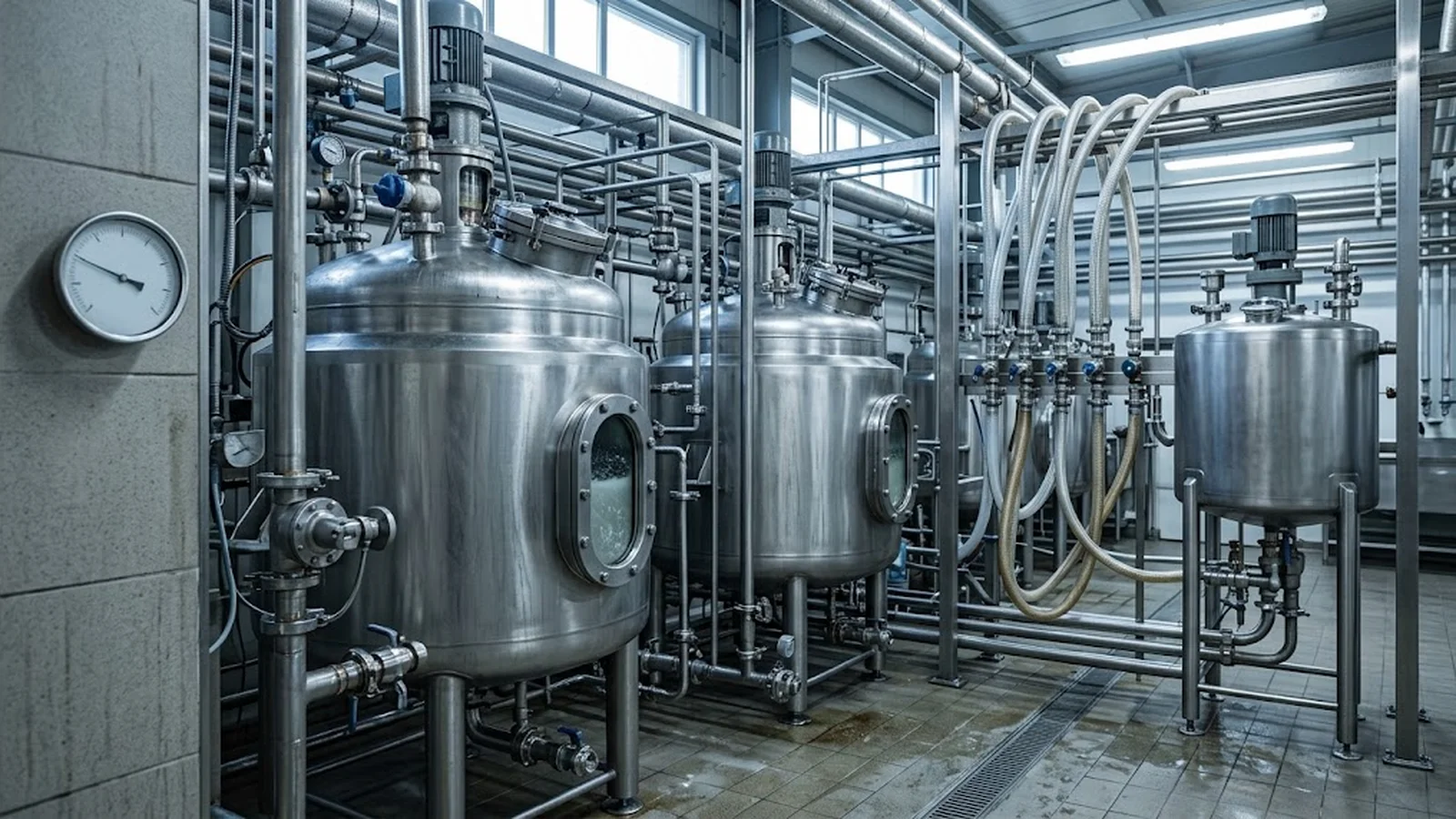
The transition from liquid concentrate to finished powder concentrates risk in a small number of rooms. Observe the spray or vacuum drying operation: inbound air filtration, the logging of drying temperatures, and how the dryer is cleaned between products — this is a classic allergen cross-contact point if the site runs multiple phospholipid or protein products. Follow the powder through milling, sieving and blending: metal control magnets or screens, sieve integrity checks, and the blending validation that supports the assay uniformity your COA assumes.
Powder handling discipline is telling. Watch how operators sample the powder, how open product is protected, and whether room environmental controls — humidity in particular — are monitored against defined limits rather than read occasionally. Finish by observing packing into the fiber drums and foil liners you will actually receive: nitrogen flush verification, seal integrity checks, and the label reconciliation that ties drum to lot record.
Cleaning validation, data integrity and the QC lab
Three support functions turn an adequate audit into a revealing one. Cleaning validation: ask for the protocol and the worst-case rationale, then walk to the equipment it covers and compare clean states. Data integrity: pick one batch record and trace a raw data source back to its origin; original records should be attributable, legible and contemporaneous, and an auditor who traces one line usually learns more than one who reads ten summaries. The QC lab: review calibration, HPLC method verification for PS assay, retention sample storage and out-of-specification records. A QC lab that keeps its standards and its sample library in order tends to belong to a plant that does the same.
Closing meeting and audit follow-up
Close the audit the same day, while observations are fresh. Present findings by risk, distinguish major from minor, and agree corrective action timelines with owners and dates in writing. Then judge the response: a good supplier treats findings as free consultancy and returns evidence-backed CAPAs; a defensive one negotiates wording. Score the site, file the report in the qualification record, and let the findings shape your next audit scope and your incoming-inspection emphasis until the CAPAs close.
FAQ
Q: How long should an on-site PS manufacturer audit take?
A: One full day is realistic for a focused process walkthrough of a single-product site, with a second half day for the QC lab and document verification. Sites producing multiple phospholipid categories, or first-time qualification audits, typically justify two days.
Q: Do I need a process chemist on the audit team?
A: It helps significantly. The conversion and purification stages involve chemistry-specific questions — enzyme activity documentation, conversion endpoints, residual solvent paths — that a generalist checklist auditor tends to skip. If you lack in-house expertise, a contracted auditor with lipid process experience pays for itself on the first audit.
Q: What is the single most revealing thing to check on the production floor?
A: Watch a batch record signature being created in real time, then trace it backward to the raw data. Real-time records match observed operations; reconstructed records rarely do. Data integrity findings predict quality system maturity better than any certificate.
Q: Can a third-party certification audit replace my own on-site audit?
A: No. FSSC 22000, BRCGS or IFS certificates confirm a management system baseline, but they do not evaluate supplier-specific risks: your specification, your allergen and origin requirements, your packaging system. Use certification scope review to focus your own audit on what only you care about.
Conclusion
A phosphatidylserine GMP audit earns its cost when it follows the process rather than the checklist. Walk the line in production order — lecithin intake and storage, enzyme conversion, purification and concentration, drying, powder handling and packing — and at each stage ask what could fail here, what record would show it, and what you can observe right now. Prepare remotely so your on-site hours go to observation, trace at least one batch record end to end for data integrity, and convert findings into dated, owned corrective actions rather than polite observations. Buyers who audit this way return from site visits with something certificates cannot provide: a working mental model of how their PS is actually made, and where the next problem would show itself first. When you are ready to move from checklist to quotation, contact our team with the grade, source and document set described above.
Sources
- FDA — Dietary supplement CGMP, 21 CFR Part 111, manufacturing and quality control requirements: https://www.ecfr.gov/current/title-21/chapter-I/subchapter-B/part-111
- EU Good Manufacturing Practice context for food ingredients — Regulation (EC) No 183/2005 on feed/food hygiene and Annex-based GMP expectations: https://eur-lex.europa.eu/legal-content/EN/TXT/?uri=CELEX%3A32005R0183
- GFSI — recognized food safety certification schemes (FSSC 22000, BRCGS, IFS) scope and audit context: https://mygfsi.com/
- ICH — Q7 Good Manufacturing Practice Guide (principles applicable to enzyme and process auditing discipline): https://database.ich.org/sites/default/files/Q7%20Guideline.pdf
Buyer fit
Who this guide is for
This guide is written for the buyer profiles below. Open your profile for the matching grades, documents and next steps, or tell us your requirements directly.
Recommended next steps
- Review the Phosphatidylserine product page.
- Compare Soy PS and Sunflower PS.
- Check manufacturing proof and Quality & R&D.
Contact sales for product documents
Share source preference, application, country, and annual quantity.
Contact Sales