
The pet supplement market has been quietly borrowing the human cognitive-health playbook. Calm chews, senior dog brain formulas, and "gut-brain axis" positioning now fill the aisles of pet specialty retail, and phosphatidylserine — long established in human nootropic stacks — is appearing on more pet formula decks each year. For ingredient buyers, though, the pet opportunity is not a simple copy-paste of a human ingredient program.
Selling PS into pet products changes three things at once: the regulatory frame shifts from dietary supplements to feed or animal food rules, the specification conversation adds palatability and species considerations, and the documentation pack your supplier must provide looks different from the one built for a human NDI or novel food file. This guide maps those differences for US and EU buyers, so you can qualify phosphatidylserine supply for pet applications with the same rigor you apply to your human lines.
!Senior dog resting calmly beside a bowl of pet supplement chews at home For the specification detail behind these documents, see our quality and R&D overview, including test methods and release criteria.

The sections below cover market context, regulations, specifications, documentation, and formulation for PS in pet products.
Why PS Is Entering Pet Cognitive and Calm Formulas
Phosphatidylserine is a phospholipid naturally present in cell membranes, including neuronal membranes, and it has decades of study in human cognitive and stress contexts. Pet formulators are drawn to the same biological logic for dogs and cats: senior pets show age-related cognitive changes, and pet owners increasingly ask for non-sedating calm and "cognitive support" products. PS fits naturally alongside ingredients such as omega-3 fatty acids, L-theanine, and B vitamins in soft chews, tablets, and toppers marketed for senior dogs or anxious pets.
Commercially, the segment is attractive because pet buyers pay a premium for differentiated actives and repeat purchase rates are high. But the same owners read labels closely, which puts pressure on brands to source well-documented ingredients. A PS ingredient with a clean specification, clear origin (soy or sunflower), and complete CoA data is as important here as in your human portfolio — arguably more so, because the pet regulatory system offers less established ingredient-status precedent than the human supplement rules you may already know.
Regulatory Landscape: US AAFCO and State Feed Rules vs EU Feed Law
In the United States, pet supplements generally live under the AAFCO model and state feed laws rather than the human dietary supplement framework. Ingredients fall into AAFCO's defined categories: feed ingredients with official definitions, GRAS/AAFCO-affirmed substances, or food permitted in human use under FD&C 403(g) with a labeling requirement such as "with phosphatidylserine". The practical consequence: FDA human-food GRAS status and facility registration support the argument that PS is acceptable in pet food, but they do not settle state-level labeling. Brands typically work with a regulatory consultant to choose the AAFCO pathway and draft state-compliant labels before the first production run.
In the EU, pet food is governed by Regulation (EC) No 767/2009 and the broader feed hygiene framework (Regulation (EC) No 183/2005). There is no pet equivalent of the human novel food list; the operative questions are whether the ingredient is a feed material or a feed additive (an additive positioning would fall under the authorization regime of Regulation (EC) No 1831/2003), whether labeling rules are met, and whether the supply chain satisfies feed hygiene requirements. Cats and dogs are non-food-producing animals, which simplifies some hygiene burdens, but your supplier should still confirm which of its certifications cover pet food use. Ask early: not every human-food PS producer will answer feed questionnaires, and the ones that do will save you months.
Sourcing Specifications and Quality Considerations for Pet Applications
Chemically, the PS you buy for a dog chew is the same soy- or sunflower-derived powder you buy for a human capsule — typically an enzymatically converted phospholipid complex standardized to a declared PS content. What changes is the emphasis. Palatability matters enormously in pet formats, so sensory data — odor, taste contribution, color in the finished chew — moves up the priority list; a supplier who provides retained samples for palatability trials is worth its weight in gold. Particle size and flowability drive the same uniformity questions as in human powders, and moisture and water activity limits matter for chew stability just as for capsules.
On contaminants, hold the line you would hold for human products: heavy metals, microbiological limits, peroxide value, and residual solvents all belong on the pet specification too, and testing frequency should be agreed in the quality agreement. There is no reason a pet formula should tolerate a looser specification, and premium pet retailers increasingly audit exactly this point.
Working With Your PS Supplier on Pet-Specific Documentation
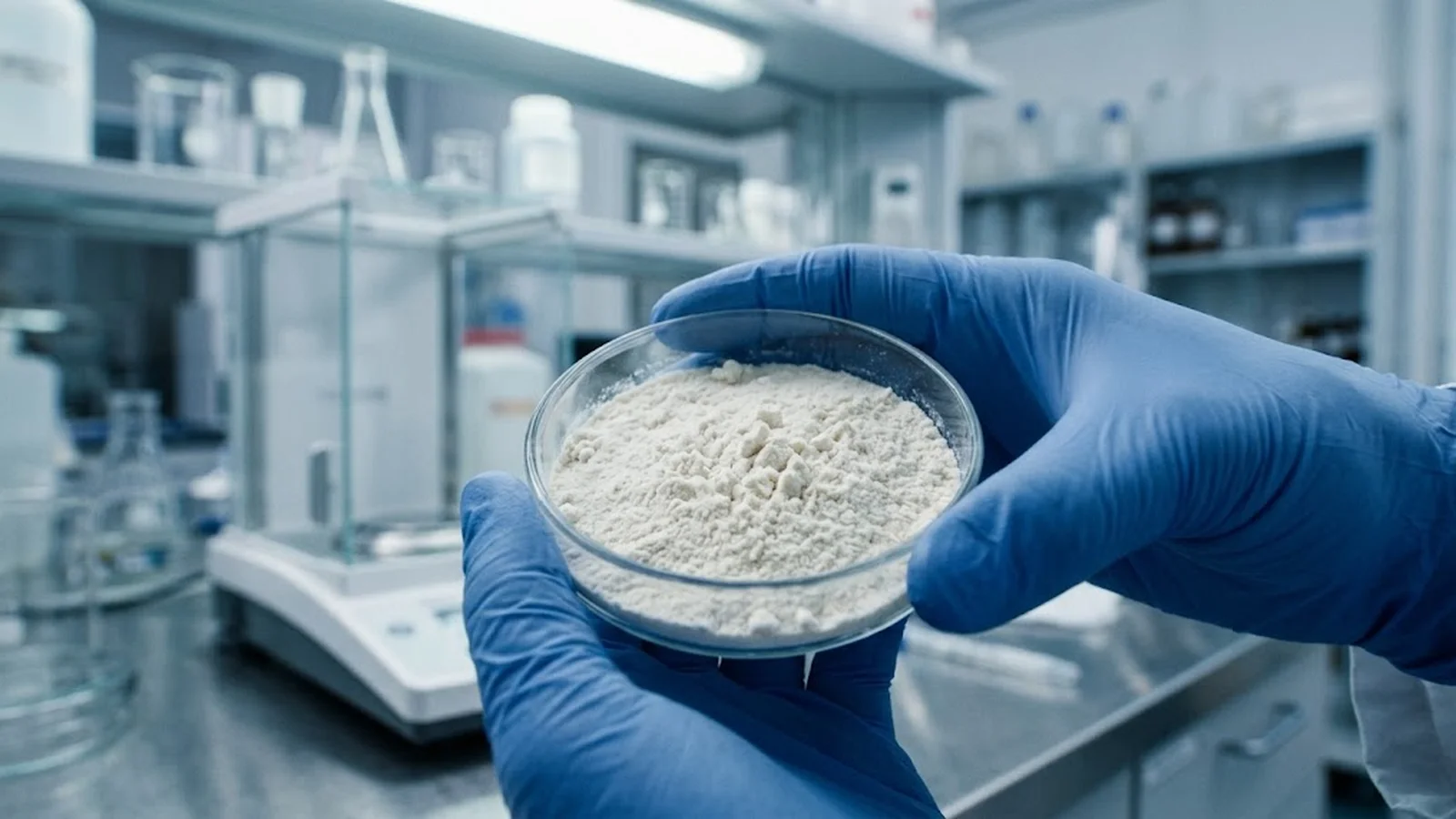
Build the pet documentation pack deliberately. From your supplier you should expect: the full specification sheet with pet-relevant parameters; batch CoAs with the assay method identified; allergen, GMO, and irradiation statements; food safety certification scope naming the production site; and clarity on whether the facility is also prepared to support feed-use documentation. In the US, ask whether the supplier can supply statements about FDA food facility registration and the GRAS basis of the material; in the EU, ask how the material should be classified (feed material versus additive use) and whether the producer is registered under feed hygiene rules if that classification applies.
Extend your existing supplier questionnaire rather than writing a new one — most human-supplement questions remain valid, and the delta is a handful of feed-specific items. Update the quality agreement to cover the pet application, including change notification (a lecithin source change from soy to sunflower matters to pet labels as much as human ones) and any animal-testing-free commitments your brand makes.
Formulation and Dose Considerations for Dogs and Cats
Pet formulas express doses per kilogram of body weight, and published animal research on PS is thinner than the human literature, so most brands position it as a supportive active alongside better-studied ingredients. Practical notes: PS powder disperses well in fat-containing chew bases; it is heat-sensitive, so cold-process steps protect the declared content; and stability testing should use the finished chew or topper matrix, not the raw powder alone, since fat-containing matrices can oxidize.
Work with your contract manufacturer on overages justified by stability data, and have the supplier confirm compatibility with your excipients early. Above all, avoid any disease-claim language — "supports cognitive health in senior dogs" is the register pet regulators and retailers accept; anything that reads as treatment of cognitive dysfunction invites regulatory attention in both the US and EU.
FAQ
Q: Can I use the same phosphatidylserine raw material for both human and pet products?
A: Often yes at the ingredient level, since the material is chemically identical, but the compliance paths differ. The human side runs on FDA dietary supplement rules (NDI/GRAS context) or EU novel food status, while the pet side runs on AAFCO/state feed rules in the US and feed regulations in the EU. Confirm with your supplier that documentation and statements cover both uses, and have your regulatory consultant map the pet pathway before production.
Q: Is sunflower-derived PS better than soy-derived PS for pet formulas?
A: Functionally both are used. Soy-derived PS is the most established supply and usually the most economical; sunflower-derived PS appeals to brands avoiding soy allergen statements or GMO-adjacent sourcing questions. Since pets are not generally soy-allergen sensitive in the way human labelers treat it, the choice often comes down to marketing positioning and supply security — but you must keep the source consistent with your labeling either way.
Q: What documents should I ask a PS supplier for before launching a pet product?
A: At minimum: specification sheet, batch CoAs with assay method, allergen/GMO/irradiation statements, food safety certification scope for the production site, statements supporting the US feed pathway (facility registration, GRAS basis), and clarity on EU feed classification and registration. Add palatability-relevant data and retained samples if you are running chew trials.
Q: Are there dose precedents for phosphatidylserine in dog supplements?
A: Published animal-specific data is limited, so most pet brands derive starting levels from formulation practice and general phospholipid research, positioning PS alongside established calm/cognitive ingredients. Have a qualified nutritionist or formulator set levels per body weight band, run stability in the finished matrix, and keep claims non-therapeutic in all markets.
Conclusion
Phosphatidylserine gives pet brands a credible cognitive- and calm-positioned active, but the pet opportunity rewards buyers who respect that this is a different compliance universe: feed rules instead of supplement rules, palatability alongside purity, and a documentation pack that answers feed questionnaires as readily as supplement audits. Qualify your PS supply once, thoroughly, for both frames — specification, origin, certifications, and pet-specific statements — and the same ingredient can serve your human and pet portfolios without compromise. Nutranexa supplies phosphatidylserine with complete US/EU documentation and supports brands bringing PS into pet nutrition, from first samples through commercial supply. When you are ready to move from checklist to quotation, contact our team with the grade, source and document set described above.
Sources
- AAFCO — Association of American Feed Control Officials: https://www.aafco.org
- FDA — Pet Food: https://www.fda.gov/animal-veterinary/animal-food-feeds/pet-food
- EU Regulation (EC) No 767/2009 on marketing and use of feed: https://eur-lex.europa.eu
- EFSA — Feed additives: https://www.efsa.europa.eu
- PubMed — Phospholipid research in animals: https://pubmed.ncbi.nlm.nih.gov
Buyer fit
Who this guide is for
This guide is written for the buyer profiles below. Open your profile for the matching grades, documents and next steps, or tell us your requirements directly.
Recommended next steps
- Review the Phosphatidylserine product page.
- Compare Soy PS and Sunflower PS.
- Check manufacturing proof and Quality & R&D.
Contact sales for product documents
Share source preference, application, country, and annual quantity.
Contact Sales