
Most phosphatidylserine orders move on familiar terms: a deposit by wire, the balance against a copy of the bill of lading. It works — until the order becomes large, the relationship is new, or banking conditions turn volatile. That is when teams start asking about letters of credit, and discover that LCs reward preparation and punish improvisation.
For a US or EU brand buying PS internationally, an LC protects both sides: the supplier is paid against compliant documents, and the buyer does not release funds before goods ship as agreed. But an LC is also a document machine: if your paperwork does not match the credit exactly, your payment security quietly disappears. This guide explains when an LC is worth using, how it works under UCP 600, the discrepancies that trip up ingredient shipments, and how to manage currency exposure.
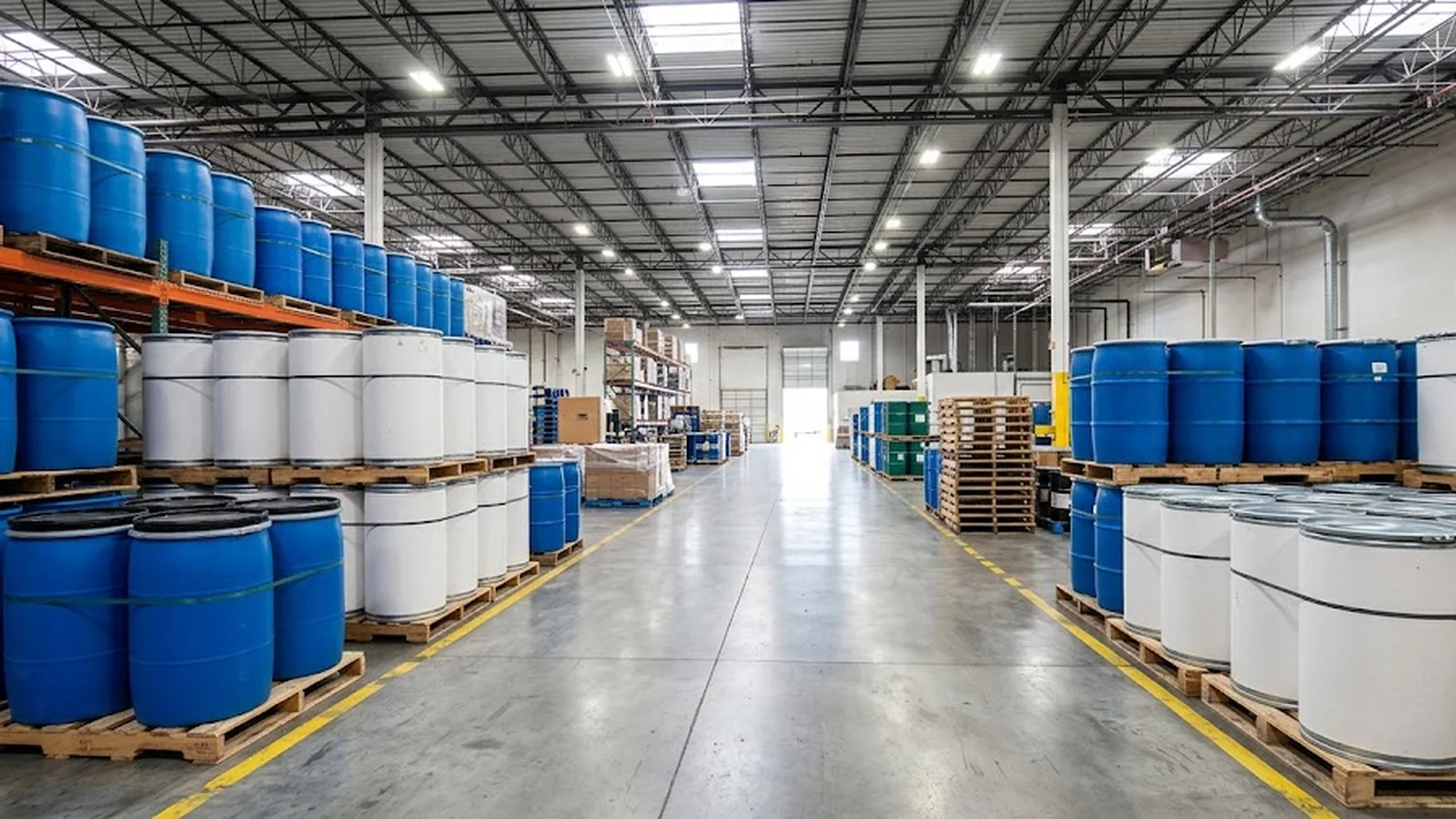
!Ingredient warehouse with packaged raw material drums ready for export For non-GMO and European programmes, our sunflower phosphatidylserine page covers the specification and documentation set buyers typically request.
The sections below cover LC fundamentals, documentary pitfalls, and currency risk management for phosphatidylserine procurement.
When a Letter of Credit Makes Sense for PS Orders
A letter of credit is a bank's conditional promise to pay the seller, triggered by presentation of documents that comply with the credit. That promise costs money — typically a fraction of one to several percent of the transaction value — plus internal time to manage. The question is not "can we use an LC" but "does this order justify one."
For PS sourcing, LCs tend to make sense in three situations. First, a first order with a new supplier in a jurisdiction where enforcing a contract would be slow or expensive; the LC substitutes bank credibility for relationship history. Second, unusually large orders — for example a full-container load positioned for a year of production — where the cash at risk between deposit and delivery is significant. Third, periods of supplier-country banking instability or FX restriction, where a confirmed LC with a bank in a stable jurisdiction may be the only payment route both sides trust.
Conversely, for repeat orders with a proven supplier, the cost and friction of an LC usually outweigh the benefit. The instrument is a bridge for trust gaps, not a permanent fixture.
How an LC Works Step by Step Under UCP 600
Most commercial LCs are issued subject to UCP 600, the ICC's uniform rules for documentary credits. The flow for a PS purchase looks like this:
- The sales contract fixes the commercial terms: Incoterm, quantity, price, payment term (irrevocable LC at sight or with tenor), latest shipment date, expiry, and the documents required.
- The buyer (applicant) asks its bank to issue the LC in favor of the supplier (beneficiary). The credit must mirror the contract — but banks deal in documents, not goods.
- The issuing bank transmits the credit, often through an advising bank in the supplier's country; asking that bank to confirm the credit adds a second payment obligation.
- The supplier ships the PS and presents documents to the nominated bank: commercial invoice, transport document (for example a bill of lading or air waybill), packing list, certificate of origin, insurance document if required by the Incoterm, and any ingredient-specific documents such as a certificate of analysis, health certificate, or phytosanitary-style certificate specified in the credit.
- Banks examine the documents strictly on their face against the credit. If they comply, payment follows; if not, discrepancies are raised and the beneficiary must cure them or seek a waiver.
The mindset shift for buyers: your quality team cares whether the PS matches the specification; the bank cares whether the certificate of analysis says what the credit required. Design the document list so a compliant presentation gives you real information — name the exact statements and certificates you need, or the LC pays out against thin paperwork.
Common Documentary Discrepancies in Ingredient Shipments
Discrepancy is the technical term for a document that does not comply, and it is where most LC problems live. Frequent examples: late shipment after the latest date stated in the credit; an expired credit; invoices exceeding the credit amount or showing a different price; transport documents with unclear shipper or consignee details; and certificates of origin, analysis, or quality lacking required data such as production date, lot number, or exact statement wording.
For PS specifically, watch the certificate of analysis requirement: if the credit requires a CoA "issued and signed by the manufacturer showing PS assay content, lot number, and production date," a CoA missing any element is discrepant. Avoid wording the beneficiary cannot control. A useful discipline before opening the credit: have the supplier confirm in writing that each document can be produced exactly as worded.
Currency Risk and Hedging Basics for Ingredient Buyers
An LC secures payment; it does nothing about currency. A PS contract priced in US dollars exposes a euro-based buyer to EUR/USD movement between contract signing and payment; the reverse applies for US buyers sourcing in other currencies. On a shipment that settles 60 to 90 days after order confirmation, an adverse move of a few percent can erase the margin a careful negotiation won.
Practical starting points: match the contract currency to your revenue currency where possible; negotiate an FX buffer or price-adjustment clause into longer agreements; and for regular volume ask your bank about forward contracts locking the rate for the expected payment date. Many mid-size brands simply fix forwards on confirmed orders rather than running a formal hedging program. The key: procurement flags the exposure at contract signature, not at payment date, so finance has time to act.

Alternatives: Deposits, Escrow, and Payment Insurance
An LC is not the only tool. A staged deposit structure — for example 30% with order and 70% against a scanned bill of lading — is fast and cheap and suits proven suppliers. Escrow-style arrangements can serve smaller deals, though coverage limits and fees apply. Export credit insurance and trade finance facilities can support open-account terms with larger, creditworthy counterparties. Documentary collection (CAD/DP) sits between open account and LC: banks handle documents, but there is no payment promise, so use it only where trust exists.
Map the options against order size and relationship maturity. A sensible progression for a new PS supplier is: initial trial order on deposits, first large order on a confirmed LC, then migration to open account once audits and deliveries have proven the relationship.
FAQ
Q: What does a letter of credit typically cost for an ingredient order?
A: Expect fees of roughly 0.5% to 2% of transaction value, depending on the banks, countries, and tenor. Confirmation by a second bank adds cost, especially for higher-risk jurisdictions. Ask both banks for a fee schedule before committing the payment term in the contract.
Q: Who chooses the documents required under the LC?
A: You do, as the applicant — and that is your leverage. List documents that give real protection: invoice, transport document, certificate of origin, packing list, plus a CoA with defined content (assay value, lot number, production date) and any health or free-sale certificates needed for customs clearance. Keep the list achievable so the supplier can comply without discrepancies.
Q: What happens if the supplier presents discrepant documents?
A: Banks refuse the presentation and notify the beneficiary, who may cure the discrepancy and re-present within the credit's validity, or ask you to sign a waiver. You are never obliged to waive — and if discrepancies signal real problems (wrong goods, late shipment, missing CoA data), the refusal is your chance to renegotiate or reject before money moves. Decide waivers with procurement and quality, not under time pressure.
Q: Should a US or EU buyer always ask for a confirmed LC?
A: Not always. Confirmation matters most when the issuing bank or its country carries meaningful risk. If the supplier's bank is well-rated and you have confidence in the jurisdiction, an unconfirmed irrevocable LC is cheaper. For a new supplier relationship, a large order, or a country with banking restrictions, confirmation is usually worth the premium.
Conclusion
Letters of credit turn a trust problem into a paperwork problem — progress, as long as you manage the paperwork with the same rigor you apply to phosphatidylserine specifications. Use an LC where the cash at risk or the newness of the relationship justifies it, draft the document list with your quality team so a compliant presentation tells you what you need to know, and address FX at contract signature rather than at payment date. Handled this way, an LC is a precise tool for the orders that genuinely need it, while mature relationships run on cheaper terms. Nutranexa supports US and EU buyers with clean, LC-compatible documentation and can coordinate with your bank's requirements from the first order. When you are ready to move from checklist to quotation, contact our team with the grade, source and document set described above.
Sources
- ICC — UCP 600 rules: https://iccwbo.org
- U.S. Commercial Service — Trade Finance Guide: https://www.trade.gov
- FDA — Importing food products into the United States: https://www.fda.gov/food/importing-food-products-united-states
- EU — Access2Markets customs and trade information: https://trade.ec.europa.eu
- PubMed — Phosphatidylserine ingredient literature: https://pubmed.ncbi.nlm.nih.gov
Buyer fit
Who this guide is for
This guide is written for the buyer profiles below. Open your profile for the matching grades, documents and next steps, or tell us your requirements directly.
Recommended next steps
- Review the Phosphatidylserine product page.
- Compare Soy PS and Sunflower PS.
- Check manufacturing proof and Quality & R&D.
Contact sales for product documents
Share source preference, application, country, and annual quantity.
Contact Sales