

Phosphatidylserine is rarely sold as a single standard material. Suppliers typically offer the same botanical extract at 20%, 50%, or 70% concentration, each carried on a different matrix, and each priced in a way that can mislead buyers who compare only the invoice cost per kilogram. For purchasing and formulation teams in the United States and Europe, choosing the wrong concentration grade surfaces later as a reformulation project, a label rework, or a cost per serving that no longer supports the retail price. This guide compares the three common grades, explains what the numbers actually mean, and sets out a practical framework for matching grade to format and comparing supplier quotes fairly. For the specification detail behind these documents, see our quality and R&D overview, including test methods and release criteria.
Why Concentration Grade Shapes Cost and Performance
Phosphatidylserine is produced by converting phosphatidylcholine-rich lecithin, typically from soy or sunflower, and the resulting extract is almost always blended with a carrier before spray drying. That carrier, combined with the target assay, defines the commercial grade. The difference between a 20% and a 70% grade is not a minor specification detail: it changes how much material you purchase, ship, warehouse, and weigh at the point of manufacture. A kilogram of 70% PS delivers three and a half times the active content of a kilogram of 20% grade, while occupying similar drum space and incurring similar freight. Concentration also affects downstream behavior. Carriers influence flowability, compressibility, hygroscopicity, taste contribution, and dispersibility in liquids, which in turn determine whether the material can be filled into capsules, pressed into tablets, or dispersed into a beverage. Buyers who treat concentration as a pricing footnote usually discover the error after the first pilot batch, when fill weights, label claims, or sensory results fail to line up with the plan.
What 20%, 50%, and 70% Grades Actually Contain
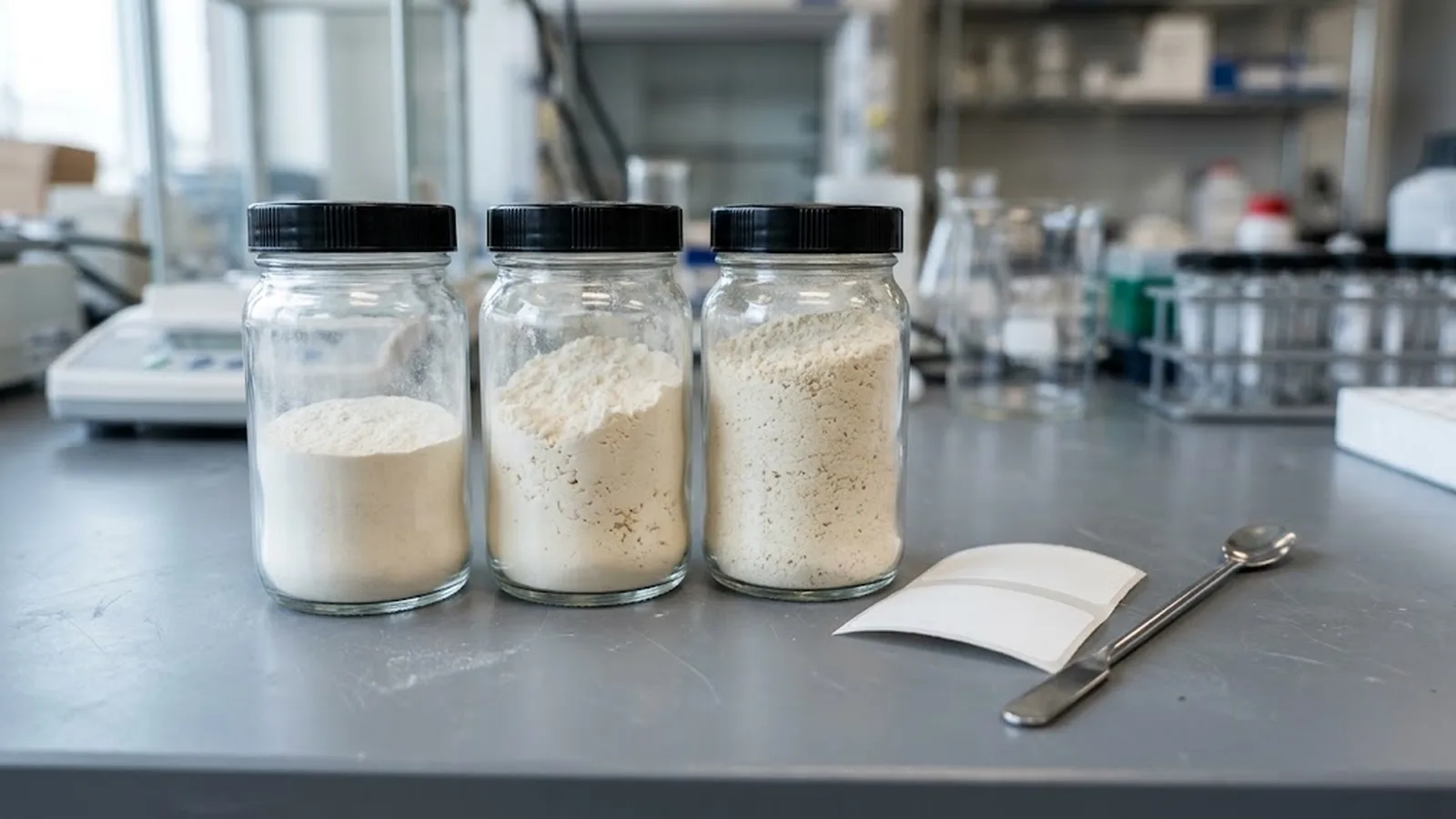
The three common grades serve different formulation economics. A 20% grade is usually spray dried on a substantial carrier such as soluble soybean polysaccharide or a similar food-grade matrix, and it is the least expensive entry point. A 50% grade typically uses a phospholipid carrier, keeping the total phospholipid fraction high while moderating cost, and it is the workhorse for capsules and tablets. A 70% grade concentrates the PS fraction further, commonly on a sunflower phospholipid base for soy-free programs, and minimizes inert mass per serving. Two documentation points deserve attention before you order. First, confirm the assay method: a properly specified certificate of analysis should report PS content by HPLC against a reference standard and state whether the figure is on an as-is or dry basis. Second, confirm the carrier's identity and origin, because the carrier determines allergen declarations, kosher and halal status, and non-GMO claims. A grade that assays correctly but carries the wrong matrix will still fail buyer review.
Comparing Quotes on Cost per Active Point
The fairest way to compare grades is cost per active point: divide the price per kilogram by the assay percentage. A 50% grade quoted at USD 90.00 per kilogram costs USD 1.80 per point, while a 70% grade at USD 130.00 per kilogram costs about USD 1.86 per point, and a 20% grade at USD 40.00 per kilogram works out to USD 2.00 per point. The headline price and the effective cost can rank suppliers in opposite orders. Build the same discipline into freight and warehousing comparisons, because lower-concentration grades require two to three times the fill weight and therefore consume more packaging, more blending capacity, and more storage per finished batch. Also verify that quotes state the same moisture basis; a grade quoted on a dry basis will assay lower as-is, and a naive comparison will overstate its value. Finally, ask for typical rather than guaranteed assay when modeling cost, and reserve the guarantee level for specification limits so your formulation retains realistic headroom.
Matching Grade to Format: Capsules, Gummies, and Beverages
Format decides how much concentration you actually need. In capsules and tablets, the constraint is unit size: a 300 mg PS claim at 100 mg per capsule requires three capsules of pure PS, which is why brands selling one- or two-capsule servings gravitate toward 50% and 70% grades, while multi-capsule regimens can absorb a 20% or 50% material. In gummies, the carrier matters as much as the assay, because polysaccharide carriers affect water activity, texture, and flavor release in a high-moisture matrix. In stick packs and instant beverages, dispersibility dominates: a carrier that clumps in cold liquid will generate complaints regardless of assay. For powdered drink mixes and medical-food-style products, where the serving weight is already generous, a 20% or 50% grade can be the most economical way to carry the claim. Align the grade decision with the format team before the RFQ goes out, because switching concentration after process validation usually triggers requalification of fill weights, blending times, and stability data.
Label Math and Declaration Rules in the US and EU
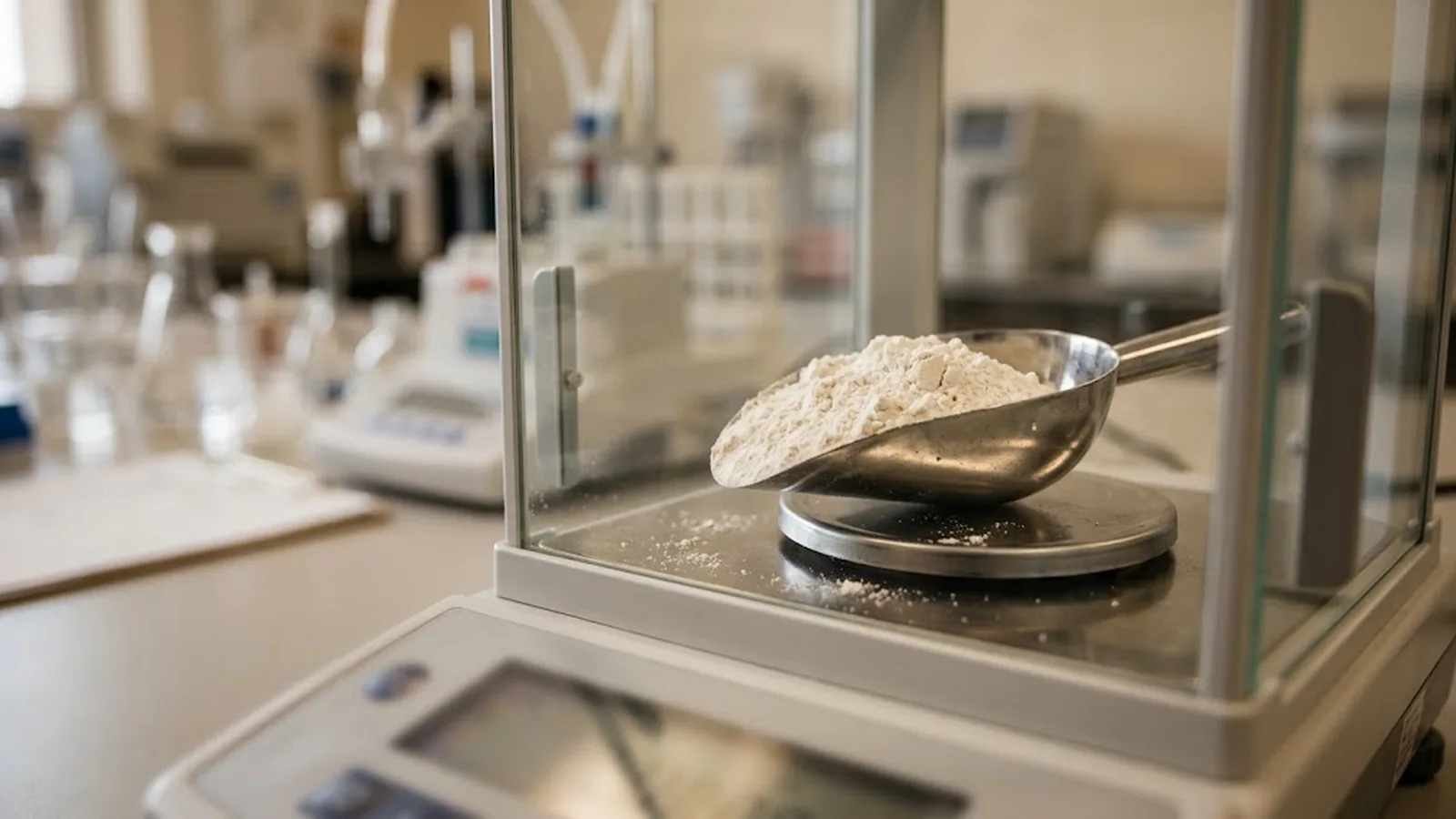
Labeling obligations are similar across grades, but the paperwork differs. In the United States, the Supplement Facts panel declares the phosphatidylserine content per serving and the carrier appears in the other ingredients list; the declared amount must match the assay and fill weight within the usual manufacturing tolerances. In the European Union, the ingredient list must name phosphatidylserine and the carrier in descending order of weight, and allergen rules follow the carrier: soy-derived carriers require allergen emphasis, while sunflower-based systems generally do not. Buyers also need to watch the basis on which claims are calculated. If a supplier guarantees 70% on a dry basis and the material carries 4% moisture, the as-is content is closer to 67%, and the per-serving declaration must reflect the as-is value. Ask suppliers for both figures on every certificate of analysis, and record the conversion in your specification so quality and regulatory teams audit the same number the label uses.
Common Pitfalls When Switching Between Grades
Brands rarely switch concentration grades deliberately; they drift into it when a supplier changes availability, when pricing forces a second source, or when a marketing team raises the dose claim. The pitfalls repeat across projects. The first is arithmetic done on the wrong basis, comparing a dry-basis quote against an as-is specification and concluding that the new grade underperforms when it does not. The second is ignoring the carrier change: a move from a soy polysaccharide carrier to a sunflower phospholipid carrier updates allergen statements, kosher and halal documents, and sometimes the country-of-origin file, none of which appear in the assay figure. The third is forgetting that the production process was tuned to the old material, because blending times, binder levels, and capsule fill weights all carry assumptions about bulk density and compressibility. The fourth is skipping the bridging stability review, since a different carrier can change water activity and shelf life. Every one of these is cheap to check on paper and expensive to discover in production, which is why grade switches belong under change control rather than in a rushed quotation email. A useful discipline is to keep a one-page grade-change checklist alongside the master specification, listing every document the carrier and assay basis touch, so the review cannot be shortened under deadline pressure.
Questions to Put in Your RFQ
A grade-aware RFQ prevents most downstream surprises. Ask each supplier to state the guaranteed and typical PS assay with the HPLC method reference and moisture basis; the full carrier composition with botanical origin; allergen, GMO, kosher, halal, and irradiation statements for the finished grade as sold, not for the extract; bulk density and particle size distribution relevant to your filling process; water activity and packaging configuration; and available stability data on the specific grade, including the recommended retest period. Request pricing at two or three volume tiers and confirm whether price is quoted per kilogram or per active point, because mixing the two conventions inside one comparison table is a common source of negotiation errors. Finally, ask for a sample drawn from a production lot rather than a golden sample, so flowability and sensory results reflect production reality. Suppliers who answer these questions without prompting are usually the ones who can support your documentation file at customer audits.
FAQ
Q: Is a 70% phosphatidylserine grade always the best value?
A: Not necessarily. Judge grades on cost per active point rather than headline price or assay alone. A well-priced 50% grade often beats a premium 70% material, and lower grades can win when the format tolerates larger serving weights. Model the full chain, including freight, packaging, and blending time, before deciding.
Q: Does the carrier count toward the serving weight on the label?
A: Yes. The carrier is part of the finished raw material, so the fill weight must deliver the declared PS content plus the carrier mass. In the US the carrier is listed under other ingredients, and in the EU it appears in the ingredient list in descending order, with allergen emphasis if it is soy derived.
Q: Can we switch from a 50% to a 70% grade without changing the formula?
A: Rarely. The higher concentration reduces the required fill weight, which changes capsule or sachet fill targets, blending ratios, and sometimes excipient levels. Plan a bridging exercise covering fill-weight validation, blend uniformity, and at least a reduced stability protocol before the change goes live.
Q: How is the PS assay on a certificate of analysis verified?
A: Credible suppliers quantify phosphatidylserine by HPLC against a reference standard, and buyers should confirm the method reference and the basis, as-is or dry. Independent third-party testing on incoming lots is a sensible control for new suppliers or after any change notification.
Conclusion
Concentration grade is one of the few sourcing decisions that touches procurement, formulation, quality, and regulatory at the same time, which is why it should be made deliberately rather than inherited from a previous quote. Compare grades on cost per active point, confirm the assay basis and carrier on every certificate of analysis, and match the grade to the format before specifications are frozen. Buyers in the United States and Europe who apply this framework tend to negotiate cleaner quotes, avoid mid-project reformulations, and defend their label declarations with confidence. Nutranexa supplies soy and sunflower-derived phosphatidylserine at multiple concentrations and can review your format and target claim against the grade that fits it best. When you are ready to move from checklist to quotation, contact our team with the grade, source and document set described above.
Sources
- U.S. Food and Drug Administration — Dietary Supplements: https://www.fda.gov/food/dietary-supplements
- NIH Office of Dietary Supplements: https://ods.od.nih.gov/
- European Commission — Nutrition and Health Claims: https://food.ec.europa.eu/food-labelling-and-nutrition/nutrition-and-health-claims_en
- Regulation (EU) No 1169/2011 on food information provided to consumers: https://eur-lex.europa.eu/legal-content/EN/TXT/?uri=CELEX:32011R1169
- PubChem — Phosphatidylserine: https://pubchem.ncbi.nlm.nih.gov/compound/Phosphatidylserine
Buyer fit
Who this guide is for
This guide is written for the buyer profiles below. Open your profile for the matching grades, documents and next steps, or tell us your requirements directly.
Recommended next steps
- Review the Phosphatidylserine product page.
- Compare Soy PS and Sunflower PS.
- Check manufacturing proof and Quality & R&D.
Contact sales for product documents
Share source preference, application, country, and annual quantity.
Contact Sales