
Canada is one of the most rule-based supplement markets an ingredient buyer can enter, and phosphatidylserine sits comfortably inside its system once the paperwork is understood. Unlike markets where a new ingredient triggers lengthy novel-food review, PS has an established regulatory identity in Canada as a medicinal ingredient acceptable in natural health products. Market entry is therefore less about proving the ingredient belongs and more about demonstrating, document by document, that your PS material is what your finished-product licence says it is.
The practical work happens upstream of the border. A Canadian importer or brand does not register the raw material itself; the Natural Health Products framework is built around the finished product, which carries an eight-digit Natural Product Number (NPN) after a product licence is issued. The ingredient buyer's job is to assemble the evidence chain — specification, certificate of analysis, assay method, purity data — that lets the licence applicant make defensible attestations to Health Canada. When that chain is complete at the raw-material stage, licence review and border clearance become predictable.
This guide covers the framework, the documents, the food/NHP boundary and the import mechanics for a B2B buyer evaluating a PS supplier. If you are benchmarking suppliers, start by reviewing the phosphatidylserine ingredient specifications and the document package behind each grade before comparing quotes.
Why Canada Is a Distinct Market-Entry Path for PS Ingredients
Canada should not be treated as an extension of the United States market, even though the two share supply chains and often the same finished-goods factories. Health Canada regulates natural health products under the Natural Health Products Regulations, which sit within the Food and Drugs Act framework. The result is a middle path: more structured than the US dietary-supplement model, faster and less costly than a drug approval. PS has decades of safe-use history and a place in Health Canada's monograph system, so the framework is an advantage — provided your raw-material documentation supports the licence claims made about it.
Three consequences follow for the buyer. First, the unit of compliance is the finished product, not the ingredient: your PS becomes part of someone's product licence evidence file. Second, the importer of record carries real obligations — goods must flow into a licensed, traceable supply chain. Third, sourcing decisions made long before shipment (assay method, heavy-metal limits, allergen declarations) determine whether downstream licence attestations can be supported. Buyers who treat Canada as a supplier-level documentation problem, rather than a border problem, enter the market faster.
The NHP Framework: Product Licence, NPN and Site Licence Context
Under the Natural Health Products Regulations, a company selling a PS-containing supplement in Canada must hold a product licence issued by Health Canada. Once issued, the product carries a Natural Product Number (NPN) printed on the label. The licence application identifies the medicinal ingredients — your PS, with its source (soy or sunflower), potency and dose — together with non-medicinal ingredients, claims and supporting evidence. Where PS matches the applicable compendial monograph, review is significantly faster — one more reason to keep your supplier's specification aligned with monograph expectations.
Downstream of the product licence, site licensing governs who may manufacture, package, label or import NHPs for commercial sale. A Canadian importer of PS-containing finished products (or of bulk material destined for Canadian manufacture) must hold a site licence with import authority, and the material must be traceable to licensed activities. Evidence standards matter here: GMP attestation for foreign suppliers is typically supported through recognized evidence such as third-party GMP certification or, historically, a site licence under frameworks like the US FDA's or Australia's TGA. A supplier already shipping into GMP-regulated markets gives the licence applicant far less to explain.
The NPN does not attach to your raw material, but your raw material's identity data underpins the NPN application. This is why experienced brands qualify PS suppliers against Canadian licence requirements before commercial terms are even discussed.
Ingredient Qualification: The Documentation an Importer Needs
Importer qualification for each PS lot should contain:
- Certificate of Analysis (COA), lot-specific, with actual results rather than specification restatement
- HPLC assay for phosphatidylserine content, using a validated method with stated limits — this is the number that flows into the licence application's potency attestation
- Heavy metals (lead, arsenic, cadmium, mercury) against limits that satisfy the most demanding of your target markets
- Microbiology (total plate count, yeast and mould, pathogens such as Salmonella and E. coli) per current pharmacopeial expectations
- Identity and purity data: source declaration (soy or sunflower), residual solvents if extraction is part of the process, allergen statement, and where relevant non-GMO verification
Two practical notes. First, assay method alignment matters: if the COA reports PS content by a method different from the licence application's stated method, the discrepancy invites questions. Second, retain raw data access, not just the summary COA — auditors may ask how the potency figure was derived. For a deeper treatment, see our HPLC assay method validation review for PS.

The Classification Boundary: NHP, Conventional Food and Supplemented Food
Not every PS product in Canada travels the NHP route. Health Canada draws a functional boundary between natural health products and foods, including the supplemented food category, and PS positioning determines which side of the line a finished product lands on. A softgel positioned for cognitive support with a medicinal dose is a classic NHP candidate; a beverage or bar with added PS positioned as everyday nutrition may be assessed as a supplemented food, where PS is permitted within the category's framework. The classification drives everything downstream: requirements, permitted claims, label format and cautionary statements.
For the buyer, the classification your customer chooses constrains the documentation you must supply. NHP-bound material needs licence-aligned identity, potency and purity data as described above. Food-bound material leans heavier on food-safety documentation: heavy metals and micro still apply, but claims support, allergen labelling and the supplemented-food facts table take centre stage. Suppliers who can articulate this boundary — and whose document packs flex to either use case — are materially easier to work with. Our dedicated NHP vs supplemented food review for phosphatidylserine walks through the decision factors label by label.
Import, Conveyance and Working with a Documentation-Ready Supplier
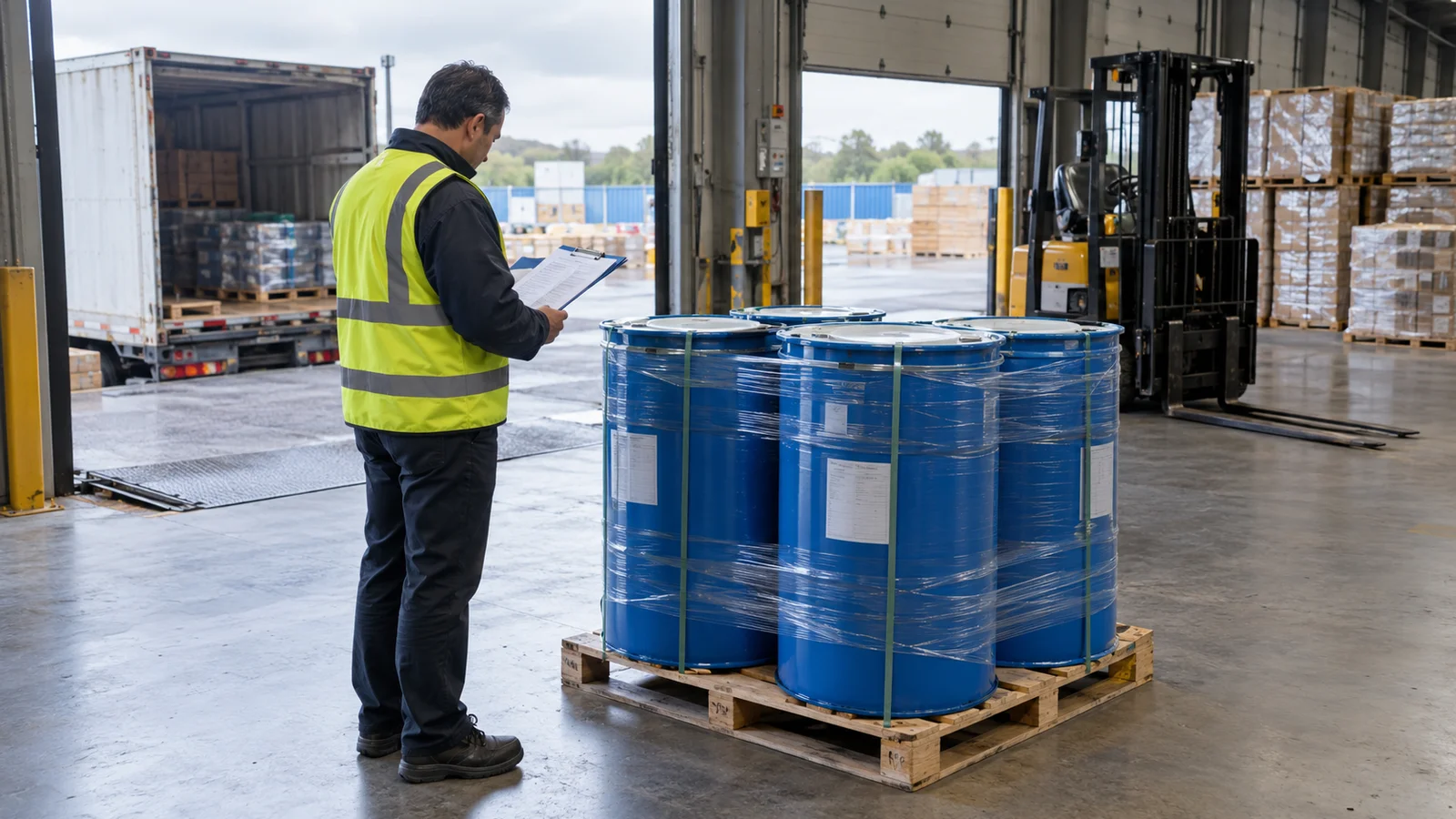
Mechanically, importing into Canada involves a small set of well-defined touchpoints: customs entry under the correct HS classification, commercial invoice and origin documentation, and — for NHP-bound goods — confirmation that the consignment serves a site-licensed importer with product-licence traceability. PS raw material is typically not detained at the border the way finished goods can be, but the importer's obligations follow the goods: non-compliant product discovered downstream traces back to the Canadian party of record. Diligent importers therefore confirm the COA against the purchase specification before the container is released rather than after.
That is the real test of supplier readiness for Canada. Questions for a prospective PS supplier are direct: Can you provide lot-specific COAs with full HPLC assay data? Are your heavy-metal and micro limits stated and consistently met? Can you support GMP evidence expectations for a foreign manufacturer in a Canadian site licence? And will your documentation remain stable across repeat lots, so a licensed product's evidence file never silently drifts? Suppliers accustomed to Canadian and EU programmes answer these without hesitation. The same supplier-qualification logic carries across differently regulated regions.
FAQ
Q: Does phosphatidylserine raw material itself need an NPN to enter Canada?
A: No. The NPN attaches to a finished natural health product after Health Canada issues its product licence. Raw PS material enters under normal customs processes, but it must feed a compliant chain: a site-licensed importer and, for NHP-bound goods, a product licence held by the brand. Its documentation supports those licences rather than holding its own.
Q: What is the difference between a product licence and a site licence in the Canadian NHP system?
A: A product licence authorizes the sale of a specific finished formulation and yields the NPN printed on the label. A site licence authorizes a company to manufacture, package, label or import NHPs commercially and attests to applicable GMP requirements. An importer bringing PS material into Canada for licensed production needs that site licence's import authority.
Q: Which PS documents matter most for a Canadian product licence submission?
A: The lot-specific COA with a validated HPLC assay for PS content, heavy-metal results against defensible limits, microbiological testing, and identity documentation covering source (soy or sunflower) and purity. Because the licence applicant attests to identity and potency, the cleaner and more method-consistent your data, the faster and safer the review.
Q: Can PS finished products be sold in Canada as foods instead of NHPs?
A: Sometimes. Health Canada's supplemented food category permits certain added ingredients, including PS under specified conditions, in conventional food formats. The classification depends on product form, representation and use pattern. Buyers should clarify which pathway the finished product takes, because the documentation emphasis shifts accordingly.
Conclusion
Canada rewards preparation. The architecture — product licence, NPN, site licence — is stable and well-documented, and PS has a clear identity within it. What separates smooth market entry from months of remediation is the raw-material evidence chain assembled before the first purchase order: assay methods that match the licence application, limits that withstand review, documentation that holds steady lot after lot. Treat supplier qualification as the first step of Canadian regulatory strategy, not a parallel track.
If you are building that evidence chain now, our team can share the full document package behind each PS grade so your Canadian submission starts on solid ground. Explore our quality control and R&D documentation or contact us for samples with lot-specific COAs.
Sources
- Health Canada — main departmental site: https://www.canada.ca/en/health-canada.html
- Health Canada — Natural and Non-prescription Health Products Directorate: https://www.canada.ca/en/health-canada/services/drugs-health-products/natural-non-prescription.html
- Natural Health Products Regulations (SOR/2003-196), Justice Laws: https://laws-lois.justice.gc.ca/eng/regulations/SOR-2003-196/
- Health Canada — Supplemented foods: https://www.canada.ca/en/health-canada/services/food-nutrition/supplemented-foods.html
Buyer fit
Who this guide is for
This guide is written for the buyer profiles below. Open your profile for the matching grades, documents and next steps, or tell us your requirements directly.
Recommended next steps
- Review the Phosphatidylserine product page.
- Compare Soy PS and Sunflower PS.
- Check manufacturing proof and Quality & R&D.
Contact sales for product documents
Share source preference, application, country, and annual quantity.
Contact Sales