

When US and EU buyers compare phosphatidylserine quotations, packaging rarely makes the shortlist. Assay, derivation, price and lead time dominate the conversation, and packaging appears only as a line item — "25 kg fiber drum" — assumed equivalent across suppliers. That assumption quietly costs money. Phosphatidylserine is an oxidatively sensitive phospholipid: its peroxide value drifts upward with oxygen exposure, its powder cakes with moisture, and its sensory profile — already distinctive — degrades visibly when packaging underperforms. Two lots with identical COAs can arrive in materially different condition depending on what stood between the powder and the container ship.
Packaging choices also ripple through operations: drum weight and dimensions drive pallet configuration, container utilization and warehouse ergonomics; liner design determines whether a partial drum can be resealed or must be repacked; and the packaging spec behind that "25 kg fiber drum" line determines whether your incoming inspection can verify what arrived.
This guide covers bulk packaging selection for phosphatidylserine powder from the buyer's side: the common formats, what each protects against, the specifications worth writing into your PO, and the handling practices that preserve quality between your receiving dock and your production floor.
!alt text Where source selection is part of the decision, our soy phosphatidylserine page documents the extraction, specification and paperwork behind the soy route.
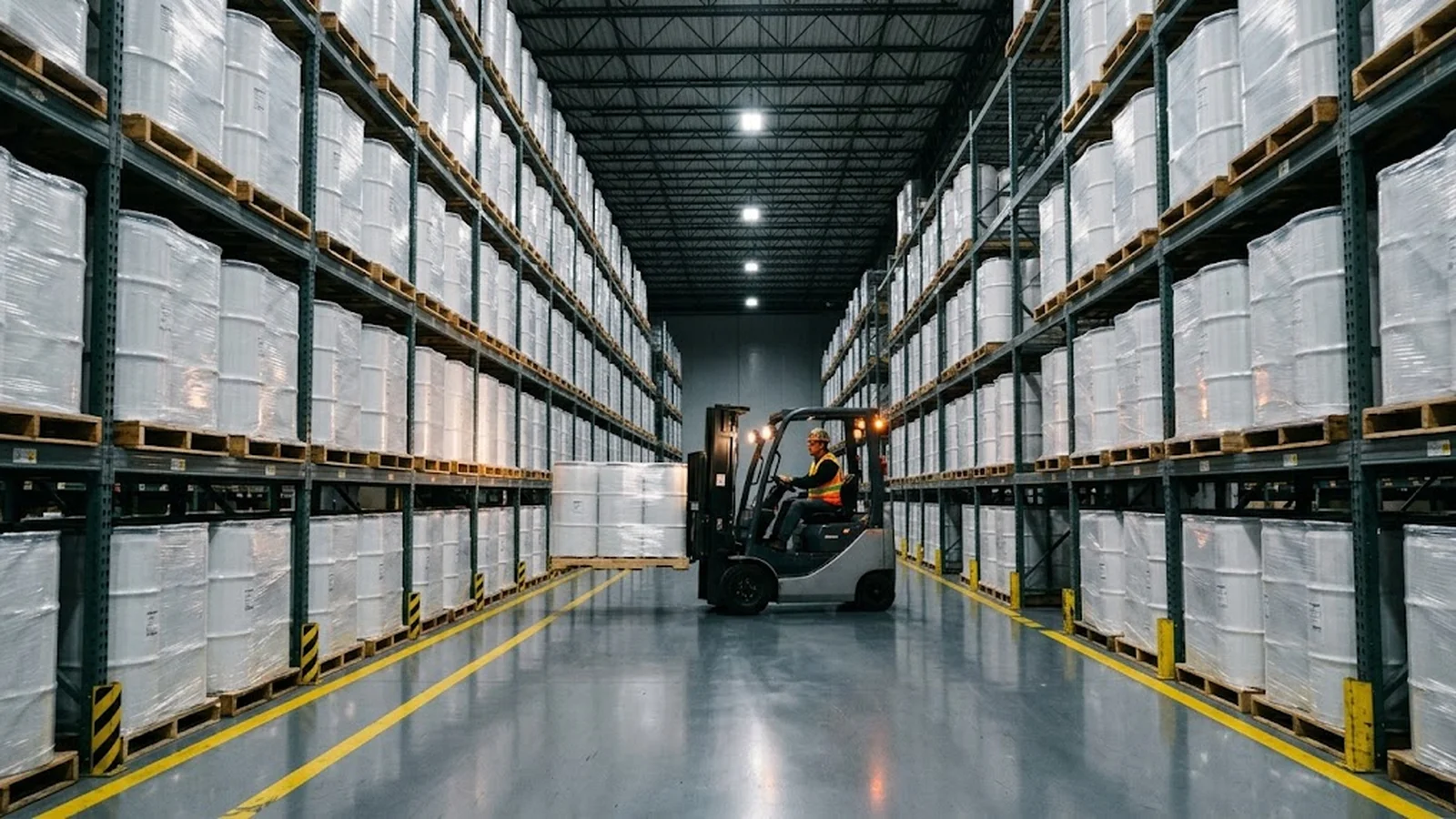
Why packaging is a quality decision, not a shipping detail
For a stable mineral or a tabletized extract, packaging is mostly a logistics concern. For a concentrated lipid powder, it is an extension of the product itself. Oxidation begins at the manufacturing stage and proceeds wherever oxygen, heat, light and time allow; the packaging system is the primary barrier that slows it across a multi-week ocean transit and months of warehouse storage. A drum with a compromised liner, or a liner opened and folded closed rather than heat-sealed at the factory, can show peroxide value drift long before the labeled retest date.
The financial asymmetry is worth stating plainly. Upgrading from a basic polyethylene liner to a high-barrier foil laminate adds a modest amount per kilogram to a material that may wholesale at well over a hundred dollars per kilogram. One oxidative rejection — a lot that fails peroxide specification on arrival, or drifts out of spec in your stability study — erases years of packaging savings. Buyers who treat liner quality as a negotiable cost item are optimizing the cheapest component of a very expensive product.
Common bulk packaging formats for phosphatidylserine powder
Most bulk PS powder moves in a small set of proven formats.
The workhorse is the 25 kg fiber drum with an inner liner — typically a multi-layer laminate including an aluminum foil barrier, heat-sealed or twist-tied closed, with the fiber body providing crush resistance and stacking strength. Twenty-five kilograms is the de facto standard: it suits common powder handling practice, stays within ergonomic lifting range with two people or a drum lift, and matches pallet patterns that containerize efficiently. Drums are typically palletized and stretch-wrapped, four to eight per pallet.
Smaller foil laminate bags or pails in the 1 to 10 kg range serve buyers running pilot batches, R&D evaluation or low-volume finished SKUs, and they reduce repack losses. At the other extreme, some suppliers offer 50 kg drums or large fiber drums for high-volume customers; these improve freight economics per kilogram but punish handling — a 50 kg drum of lipid powder is awkward, and every awkward unit invites a dropped liner or a torn seal.
What matters more than the outer format is the liner system: material construction (foil laminate versus plain PE), closure method (heat seal versus tie), nitrogen flushing where offered, and whether the liner is a single bag or bag-in-bag. Ask suppliers to describe the full packaging construction, because that is where they differ even when the outer "25 kg fiber drum" line looks identical on two quotations.
What the packaging must protect against
Four enemies govern liner performance for PS powder.
Oxygen is the primary one. PS oxidation is tracked on the COA as peroxide value, and the liner's oxygen transmission rate determines how much headway headspace oxygen makes during transit and storage. High-barrier foil laminates reduce oxygen ingress dramatically compared with monolayer polyethylene; nitrogen flushing at filling reduces the oxygen already inside the package. If your supplier offers nitrogen flush at the drum stage, take it — and verify it on the packaging specification rather than assuming.
Moisture follows closely. Lipid powders on carriers are hygroscopic to varying degrees; moisture gain causes caking, flow problems and faster degradation. The foil layer doubles as the moisture barrier, one reason foil laminate liners outperform thicker but permeable PE bags.
Light matters less than for some actives, but opaque packaging removes a degradation pathway for free. Physical contamination rounds out the list: the drum and liner must be food-grade, intact, and sealed at filling so the contents never contact the fiber body, which can shed fibers or carry residues.
Packaging specifications and documentation to require
Because packaging differences hide behind identical line items, put the packaging on paper. Request — or better, require — a packaging specification as part of the supplier documentation pack, and reference it by version in your purchase order. It should state:
- Outer packaging: drum type and material, net and gross weight, dimensions, and stacking or pallet configuration
- Liner construction: layer-by-layer description (for example, PET/aluminum foil/PE laminate), food-contact compliance of each food-contact layer, thickness where relevant
- Closure method: heat-sealed versus tied, and whether an oxygen absorber or desiccant is included
- Gas flush: whether nitrogen flush is applied at filling and its verification method, if any
- Labeling: product identity, lot number, net weight, origin, and storage statement, including the retest or expiry date basis
Two documents deserve particular attention. First, a food contact declaration for the liner materials — for EU-bound goods, compliance with Regulation (EU) No 10/2011 for plastics in contact with food where applicable, and for US-bound goods, FDA food-contact compliance of the contact layer. Second, the storage statement on the label: recommended temperature, protection from light and moisture, and the retest period. If the supplier's storage conditions assume refrigerated warehousing and your warehouse is ambient, reconcile that difference before the first commercial shipment, not after a stability failure.
Receiving, handling and warehouse practice
Good packaging can still be defeated at your own dock. Build a short packaging check into incoming inspection: drums intact and not crushed or punctured, stretch wrap and pallet condition photographed before unwrapping, seals unbroken and liner closure verified on sampled drums, labels matched to the PO and COA. Crushed drums matter more than they look — a deformed fiber drum can stress or split the liner, and damage that is cosmetic on the drum can be functional inside it.
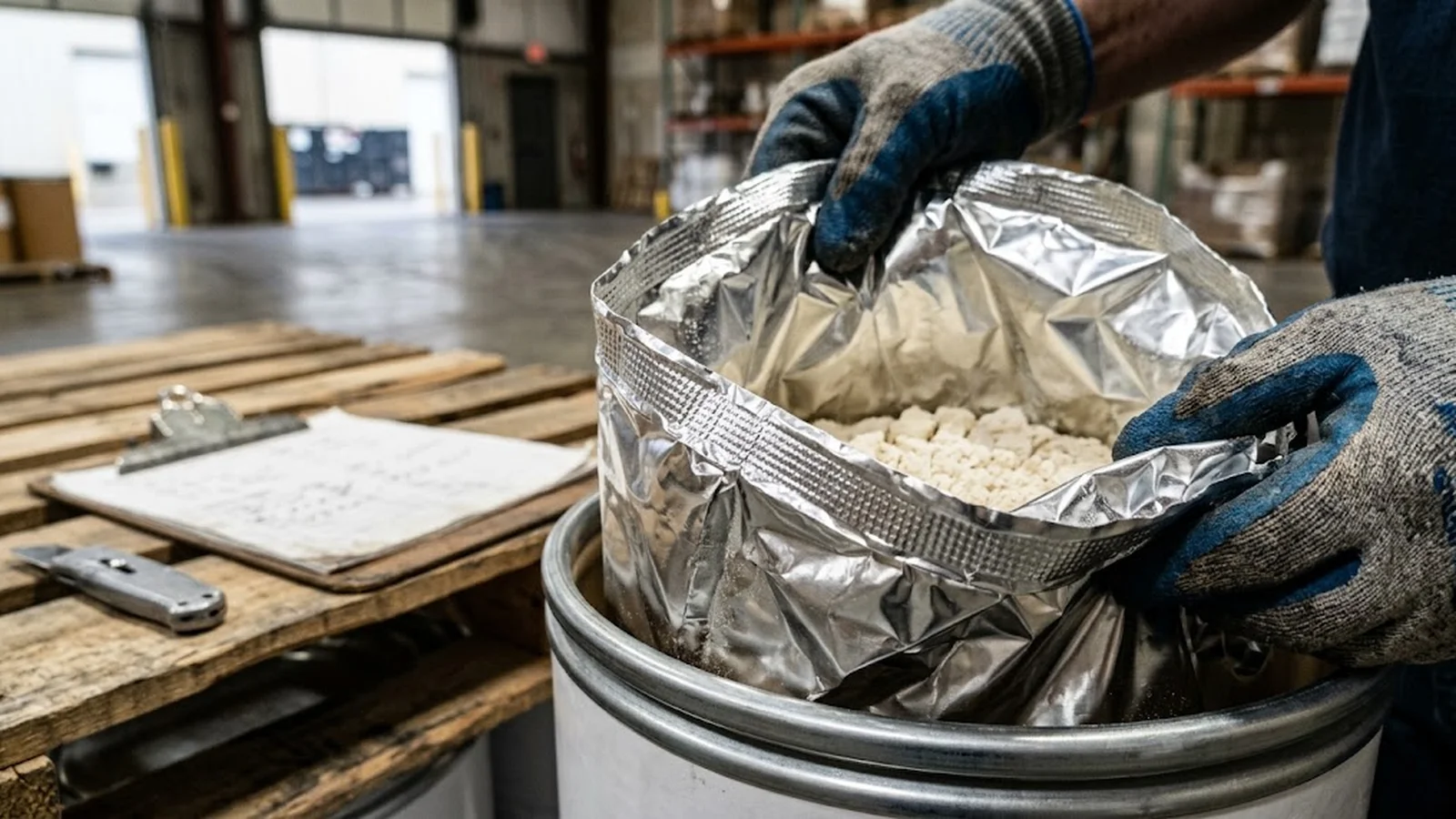
In the warehouse, keep drums closed, on pallets, away from walls, heat sources and the largest temperature swings — loading dock thresholds and exterior walls are the usual offenders — and observe the conditions on the supplier's storage statement. If you decant partial drums, work under low humidity with clean, dry scoops, expel headspace air where practical, reseal promptly, and record the opening date so your retest clock reflects reality. Every opened drum is a packaging system restart; treat it that way.
Partial drums, resealing and downstream transfer
The gap between the liner's design life and your consumption pattern is where buyers lose quality silently. A 25 kg drum consumed within weeks of opening rarely has a problem; a drum drawn down over months needs a genuine resealing strategy — heat-sealable liners re-sealed with an impulse sealer, oxygen absorbers added on reopening, or repacking remainders into smaller foil bags or pails reserved for the purpose. Discuss this before the first order: some suppliers will provide resealable liners or smaller secondary bags at little or no cost, and the conversation costs nothing but an email.
Match packaging size to consumption. If your production run consumes 8 kg of PS per month, ordering one 25 kg drum every three months and resealing twice is worse than ordering smaller units more often, even at a slightly higher per-kilogram price. Packaging optimization is ultimately a consumption-rate calculation, and the buyer's operations team, not the supplier, holds those numbers.
Sustainability and disposal considerations
EU buyers in particular face growing pressure on packaging waste, and fiber drums with foil liners present a genuine tension: the fiber body is readily recyclable, while the foil laminate liner typically is not. Some suppliers offer liner take-back or reduced-complexity liners where barrier requirements allow. Where the barrier requirement cannot be relaxed — and for PS it usually cannot — product protection takes priority, and the waste conversation should focus on the outer drum, pallet pooling and transport efficiency rather than weakening the liner. Whatever you choose, record the packaging construction in your specification so sustainability reporting reflects reality.
FAQ
Q: Is a 25 kg fiber drum with a foil liner always the right choice?
A: It is the right default for most bulk buyers, but consumption rate should decide. High-volume users may benefit from larger formats or big-bag options; low-volume or pilot users are better served by smaller foil bags or pails that eliminate repacking losses and partial-drum exposure.
Q: Does nitrogen flushing at the drum stage really matter?
A: Yes. Flushing lowers the oxygen level in the headspace at sealing, which slows oxidative drift from day one. The effect compounds over long transits and long warehouse dwell times, and it shows up in peroxide value trends rather than in any dramatic visible difference — which is why buyers underestimate it.
Q: What should I do if a drum arrives crushed but the liner looks intact?
A: Document the condition with photos before unwrapping, open the drum carefully, and inspect the liner for splits, creases or seal damage. If the liner is damaged or you cannot confirm its integrity, quarantine the lot, sample it for peroxide value and moisture against the specification, and involve the supplier before release. Your pre-shipment inspection terms and cargo insurance coverage may also apply.
Q: How should I store an opened drum of PS powder?
A: Reseal the liner promptly with minimal headspace, keep the drum closed and on a pallet in a cool, dry area away from heat sources and temperature swings, and record the opening date. If the drum will remain in use for more than a few weeks, use oxygen absorbers or transfer the remainder to smaller sealed foil containers.
Conclusion
Bulk packaging is the quiet variable in phosphatidylserine quality: invisible on the quotation, decisive in the warehouse. Specify the full packaging system — not just the drum — in your purchase orders, demand liner construction details and food-contact declarations as part of the documentation pack, favor high-barrier liners and nitrogen flush for a lipid this sensitive, and make packaging condition part of your receiving inspection rather than an afterthought. Then align packaging size with your actual consumption rate and resealing practice, because the best drum in the world cannot protect powder in a half-open drum sitting on a dock. Buyers who manage packaging with the same rigor as assay and identity typically see the return where it matters: peroxide values that hold, sensory profiles that stay consistent, and retest dates that mean what they say. When you are ready to move from checklist to quotation, contact our team with the grade, source and document set described above.
Sources
- FDA — Dietary supplement CGMP, 21 CFR Part 111, packaging, labeling and holding requirements: https://www.ecfr.gov/current/title-21/chapter-I/subchapter-B/part-111
- Regulation (EU) No 10/2011 on plastic materials and articles intended to come into contact with food: https://eur-lex.europa.eu/legal-content/EN/TXT/?uri=CELEX%3A32011R0010
- FAO/WHO — Codex Alimentarius general guidelines on food storage and transport (CXC 1-1969 general principles context): https://www.fao.org/fao-who-codexalimentarius/codex-texts/list-standards/en/
- ISTA — packaging transit testing standards context: https://www.ista.org/
Buyer fit
Who this guide is for
This guide is written for the buyer profiles below. Open your profile for the matching grades, documents and next steps, or tell us your requirements directly.
Recommended next steps
- Review the Phosphatidylserine product page.
- Compare Soy PS and Sunflower PS.
- Check manufacturing proof and Quality & R&D.
Contact sales for product documents
Share source preference, application, country, and annual quantity.
Contact Sales